Environmental Context of the Region
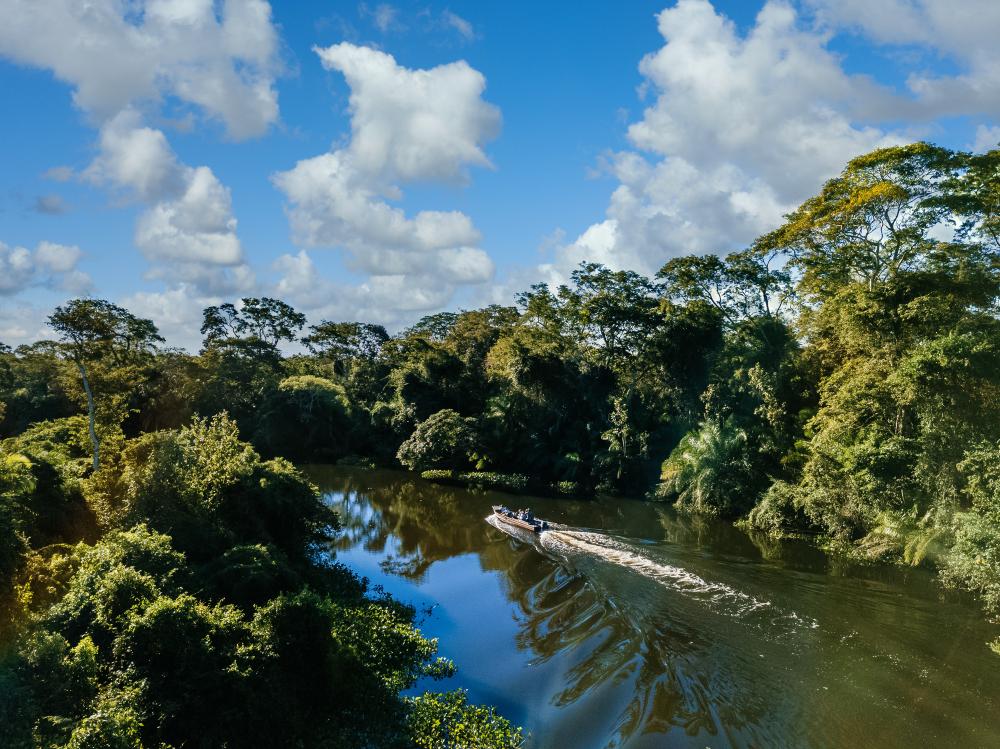
Pontal do Sul and Ilha do Mel, on the coast of Paraná in southern Brazil, are part of a wider Atlantic Forest coastal landscape of exceptional ecological importance. The region brings together forests, restingas, mangroves, dunes, wetlands, estuarine environments and marine ecosystems within a relatively compact geographical area.
This combination of habitats supports significant biological diversity and creates important ecological connections between terrestrial, coastal and marine environments.
- High biodiversity, with numerous plant, animal and microorganism species associated with Atlantic Forest and coastal ecosystems;
- A dense network of protected areas throughout the Paraná coast;
- Ecologically sensitive habitats, including restingas, mangroves, dunes, wetlands and coastal forests;
- Extensive natural landscapes that remain connected to larger Atlantic Forest remnants;
- Important habitat for pollinators, including native stingless bees, solitary bees, butterflies, beetles and other pollinating insects.
The broader Atlantic Forest of Paraná and São Paulo contains some of the largest and best-preserved remaining areas of the biome. UNESCO recognizes the ecological importance of this wider landscape, including protected areas of the Atlantic Forest in southeastern Brazil.
A History of Environmental Protection
Environmental protection on the Paraná coast has developed over decades through scientific research, public policy, protected-area creation and the work of universities, environmental agencies, traditional communities and civil society.
Scientific research and coastal studies
During the second half of the twentieth century, scientific research on the Paraná coast expanded considerably. The Federal University of Paraná (UFPR) became an important center for marine, coastal and environmental research, particularly through what is now the Center for Marine Studies — CEM/UFPR in Pontal do Sul.
1982 — Ilha do Mel Ecological Station
A decisive step in the protection of Ilha do Mel occurred in 1982, when the Ilha do Mel Ecological Station was created. Its objectives include the preservation and recovery of mangroves, restingas, coastal wetlands and other natural ecosystems.
2000 — National System of Conservation Units
In 2000, Brazil established the National System of Conservation Units — SNUC through Federal Law 9.985, creating a national framework for protected-area categories, management and conservation objectives.
2002 — Ilha do Mel State Park
The Ilha do Mel State Park was created in 2002, complementing the ecological station and protecting beaches, rocky shores, coastal forests and other natural environments.
Together, the Ecological Station and State Park protect the great majority of the island’s territory.
2006 — Atlantic Forest Law
The approval of the Atlantic Forest Law — Federal Law 11.428/2006 strengthened the legal framework governing the conservation, protection, regeneration and use of native vegetation within the Atlantic Forest biome.
The law expressly includes associated ecosystems such as mangroves and restinga vegetation, both highly relevant to the Paraná coast.
International Importance of the Atlantic Forest
The Paraná coast forms part of a much broader Atlantic Forest conservation landscape recognized internationally for its biological significance.
The Mata Atlântica Biosphere Reserve, recognized through UNESCO’s Man and the Biosphere Programme, extends across large areas of the Brazilian Atlantic Forest and includes territories in Paraná.
In addition, the UNESCO World Heritage site known as the Atlantic Forest South-East Reserves, located in Paraná and São Paulo, protects approximately 470,000 hectares distributed among multiple protected areas and represents one of the most extensive and best-preserved domains of the Brazilian Atlantic Forest.
Ecological Sensitivity
Pontal do Sul, Ilha do Mel and the surrounding Paraná coast are environmentally sensitive because terrestrial, estuarine and marine ecosystems interact within a narrow coastal zone.
1. Fragile coastal ecosystems
Restingas, dunes, wetlands, mangroves and coastal forests are vulnerable to changes in vegetation cover, hydrology, sediment dynamics and human occupation.
Protecting these environments requires maintaining ecological processes that include water circulation, vegetation regeneration, seed dispersal and pollination.
2. Ecological connectivity
The Paraná coast forms part of a larger ecological network connecting forests, estuaries, islands and protected areas.
Maintaining this connectivity helps support wildlife movement, genetic exchange and the long-term persistence of populations of birds, mammals, reptiles, amphibians, insects and plants.
3. Coastal and marine interaction
Unlike purely terrestrial conservation areas, this region is influenced by the interaction between Atlantic Forest vegetation, estuaries, beaches and the ocean.
This makes integrated coastal management especially important.
Environmental Rules and Conservation Frameworks
Environmental protection on the Paraná coast is supported by federal and state legislation, conservation-unit regulations, territorial planning instruments and specific management rules.
- Atlantic Forest Law — Federal Law 11.428/2006, regulating the protection and use of native Atlantic Forest vegetation;
- National System of Conservation Units — SNUC, Federal Law 9.985/2000;
- Federal environmental legislation protecting permanent preservation areas, native vegetation and biodiversity;
- State environmental regulations administered by the Instituto Água e Terra — IAT/PR;
- Management rules and plans governing protected areas on Ilha do Mel and elsewhere on the Paraná coast;
- Ecological-Economic Zoning — ZEE developed for the Paraná coastal region;
- CONAMA regulations concerning sensitive coastal ecosystems;
- Guidelines, licensing and enforcement involving IBAMA, ICMBio, state authorities and other competent agencies.
Depending on location and type of intervention, these frameworks may impose restrictions or require authorization, licensing, environmental studies or other forms of technical assessment.
Protected Areas and Visitor Management
Ilha do Mel is a particularly important example of how tourism, traditional communities and biodiversity conservation must coexist within a limited territory.
The island contains two major state conservation units: the Ilha do Mel Ecological Station and the Ilha do Mel State Park.
The Ecological Station prioritizes environmental preservation and scientific research, while the State Park also permits organized public visitation, environmental education and recreation compatible with conservation objectives.
Paraná has also been developing systems for improved visitor management, access control and environmental monitoring on the island.
Science and Environmental Monitoring
Pontal do Sul has an unusual advantage for environmental initiatives: the presence of the Federal University of Paraná’s Center for Marine Studies — CEM/UFPR.
The center maintains laboratories and research groups working in fields that include:
- marine ecology;
- marine mammals and sea turtles;
- seabirds;
- fish ecology;
- coastal and estuarine processes;
- marine microbiology;
- coastal environmental management;
- oceanography;
- ecotoxicology;
- fisheries and marine protected areas.
UFPR also participates in the Beach Monitoring Project — Projeto de Monitoramento de Praias, creating an important connection between academic research, biodiversity monitoring and practical conservation.
Pollinators and Native Bees
Although the Paraná coast is often associated with marine conservation, terrestrial pollination is equally important to the functioning of its forests, restingas and other native vegetation.
Native bees and other pollinating insects contribute to the reproduction of many flowering plants and therefore to vegetation regeneration, food webs and broader ecosystem resilience.
Native stingless bees are particularly relevant in Brazil because they are part of the country’s natural ecological heritage and provide an accessible connection between biodiversity conservation, environmental education, traditional knowledge and citizen science.
Why the Region Is Strategic for Pollinator Projects
Pontal do Sul and the Ilha do Mel region offer several characteristics that make them especially relevant for pollinator conservation, environmental education and citizen-science initiatives.
- Presence of diverse native vegetation capable of providing pollen, nectar, nesting resources and shelter;
- Proximity to restinga and Atlantic Forest habitats;
- Connection with a broader network of protected coastal ecosystems;
- Immediate proximity to CEM/UFPR, creating opportunities for scientific dialogue, education and monitoring;
- Presence of native bees and other pollinating insects;
- Opportunities for citizen science, biodiversity observation and environmental education;
- Increasing human and tourism pressures that reinforce the importance of habitat protection and ecological awareness.
Institutions and Conservation Networks
Environmental protection in the Paraná coastal region involves institutions operating at different levels, from local research centers to state, federal and international conservation frameworks.
Regional and national institutions
- Federal University of Paraná — UFPR, particularly the Center for Marine Studies in Pontal do Sul;
- Instituto Água e Terra — IAT/PR, responsible for state environmental management and several protected areas;
- ICMBio, responsible for Brazil’s federal conservation units;
- IBAMA, with responsibilities involving environmental regulation and enforcement;
- Universities and research networks working with biodiversity, climate, pollinators and citizen science;
- Private foundations and civil-society organizations supporting conservation and environmental education.
International frameworks and organizations
- UNESCO, through the Mata Atlântica Biosphere Reserve and World Heritage conservation frameworks;
- IUCN — International Union for Conservation of Nature, an important global reference for biodiversity conservation;
- BirdLife International, active internationally in bird and habitat conservation;
- WWF and Conservation International, organizations involved in broader biodiversity and Atlantic Forest conservation initiatives.
These organizations do not necessarily operate directly in every locality of Pontal do Sul or Ilha do Mel, but they form part of the broader scientific, policy and conservation landscape surrounding the Atlantic Forest.
Conservation, Education and Community Participation
Long-term conservation cannot depend exclusively on protected areas or environmental enforcement.
It also depends on the participation of residents, schools, researchers, visitors, local organizations and future generations.
Environmental education can transform pollination, native bees, coastal ecology and biodiversity from abstract concepts into phenomena that people can observe directly in their own surroundings.
Citizen science adds another dimension by allowing members of the public to participate in biodiversity observation and contribute information to wider scientific initiatives.
Strategic Perspective for Ilha do Mel Nativo
For Ilha do Mel Nativo, Pontal do Sul and the surrounding Paraná coast provide a particularly meaningful setting for initiatives that combine:
- native-bee conservation;
- pollinator monitoring;
- citizen science;
- environmental education;
- Atlantic Forest biodiversity;
- coastal ecology;
- community participation;
- responsible and sustainable tourism.
The objective is not simply to talk about conservation, but to strengthen the connection between people, science and the natural environment that surrounds them.
In a region where Atlantic Forest, restinga, estuary and ocean meet, pollinator conservation can become part of a broader understanding of biodiversity — connecting small native bees to the health of an entire coastal landscape.
Official References
- Instituto Água e Terra — Parque Estadual da Ilha do Mel
- Federal Law 9.985/2000 — National System of Conservation Units
- Federal Law 11.428/2006 — Atlantic Forest Law
- Instituto Água e Terra — Ecological-Economic Zoning of Paraná
- UNESCO — Mata Atlântica Biosphere Reserve
- UNESCO World Heritage Centre — Atlantic Forest South-East Reserves
- Federal University of Paraná — Center for Marine Studies
Comentários