Environmental context of the region
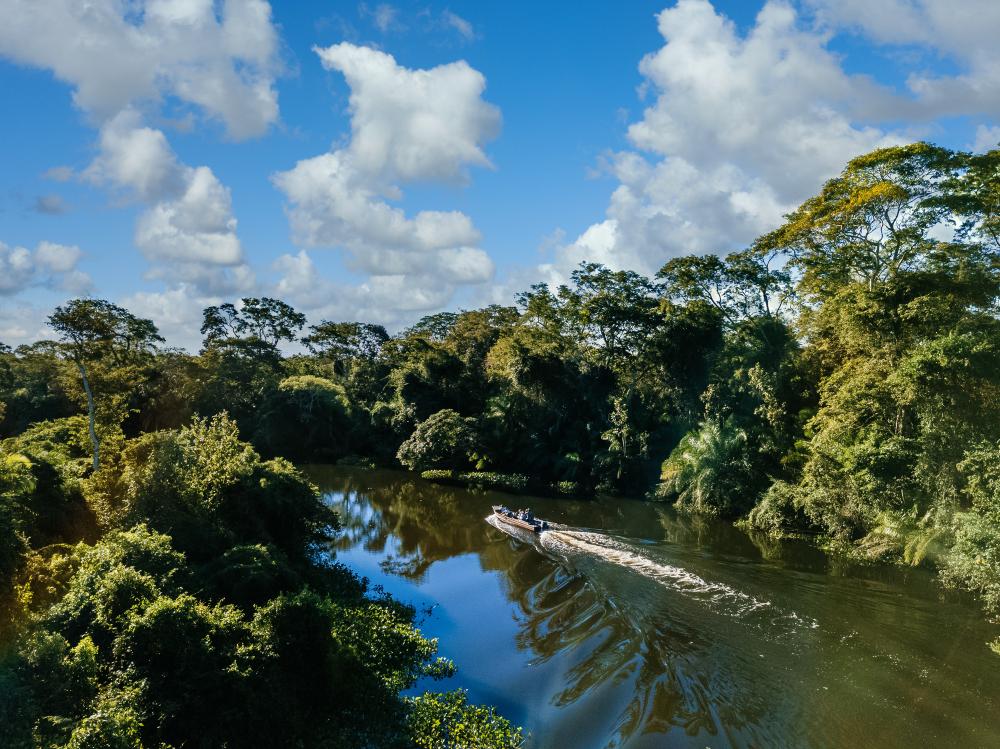
The region of Pontal do Sul and Ilha do Mel, on the coast of Paraná, is part of one of the most sensitive and strategic sections of the Atlantic Forest. It is a territory characterized by:
- High biodiversity, with a large number of fauna and flora species;
- A high concentration of conservation units in a relatively small area;
- Rare and fragile ecosystems, such as restingas, mangroves, dunes, marshes and coastal rainforests;
- Low levels of urbanization across most of the coastal strip;
- Critical importance for pollinators, especially native stingless bees and other pollinating insects.
These elements make the Paraná coast recognized as one of the last well-preserved large remnants of Atlantic Forest in the world, with ecological relevance that goes beyond local and regional scales, reaching national and international significance.
Historical overview of environmental protection
Environmental protection of the Paraná coast was built over several decades, with strong participation from universities, environmental agencies and civil society organizations. Key historical milestones include:
1950s to 1970s: scientific surveys intensify, especially those conducted by the Federal University of Paraná (UFPR), documenting the richness of coastal and marine biodiversity.
1975 to 1982: creation and consolidation of major protected areas in the region, including conservation units on Ilha do Mel and surrounding areas. These measures were essential to contain unregulated human expansion.
1985 to 2000: Brazil advances in environmental legislation, and Paraná strengthens coastal protection. Discussions that would lead to the Atlantic Forest Law gain momentum. Additional parks, ecological stations and environmental protection areas are created or expanded.
2006 – Atlantic Forest Law (Federal Law 11.428): the main legal framework dedicated to protecting the Atlantic Forest is approved. From this point on, the Paraná coast becomes subject to stricter rules regarding vegetation suppression, land use, interventions in restingas and forests, reinforcing its status as a national heritage biome.
2010 onward: much of the coastal region becomes part of international programs, such as the Atlantic Forest Biosphere Reserve under UNESCO. Ecological corridor initiatives linking Ilha do Mel, Paranaguá, Guaraqueçaba, Superagui and Guaratuba gain strength, integrating conservation actions for biodiversity and pollination systems.
Ecological sensitivity and importance
The region of Pontal do Sul, Ilha do Mel and its immediate surroundings is considered extremely sensitive from an ecological standpoint. This sensitivity is expressed in three main dimensions:
1. Fragile ecosystems: the presence of restingas, dunes, marshes, mangroves and coastal forests makes the area highly vulnerable to physical changes. These ecosystems have slow regeneration and depend on maintaining native vegetation, hydrological balance and pollinators to remain functional.
2. Ecological connectivity: the Paraná coast functions as a major ecological corridor, connecting different conservation units and allowing species movement between protected areas. The Pontal do Sul and Ilha do Mel region contributes directly to genetic flow and the maintenance of populations of birds, mammals, reptiles, amphibians and pollinating insects.
3. International relevance: the protected-area mosaic of the Paraná coast is part of the Atlantic Forest Biosphere Reserve, recognized by UNESCO. This reinforces the region’s importance not only locally, but also globally, as a reference in conserving tropical coastal forests and pollination systems linked to the Atlantic Forest.
Specific rules and laws governing the region
Environmental protection of the Paraná coast is supported by a robust set of federal and state laws, as well as local regulations specifically designed for the conservation of the Atlantic Forest and its associated ecosystems. Key legal instruments include:
- Atlantic Forest Law (Federal Law 11.428/2006), which regulates native vegetation use and protection;
- National System of Conservation Units (SNUC), defining categories and management rules for protected areas;
- State environmental regulations issued by the IAT/PR;
- Management plans of conservation units on Ilha do Mel and adjacent territories;
- Ecological-Economic Zoning (ZEE) of the Paraná coast, guiding land use and permitted activities;
- CONAMA resolutions regulating restingas and mangroves as permanent preservation areas;
- Standards and guidelines issued by IBAMA and ICMBio for biodiversity conservation and inspection.
These rules translate into:
- Strict limitations on new construction in sensitive natural areas;
- Requirements for environmental studies even for smaller interventions;
- Prohibition or restriction of activities that could impact dunes, restingas or native vegetation;
- Visitor-load control in areas such as Ilha do Mel, with specific rules for access, waste disposal and circulation;
- Continuous monitoring and enforcement by environmental agencies and the Environmental Police.
Government actions and conservation measures
The State of Paraná, alongside federal institutions and universities, has implemented several measures to protect and monitor the coastal region, including Pontal do Sul and Ilha do Mel. Key actions include:
1. Monitoring of fauna and flora: programs such as the Beach Monitoring Project and other scientific initiatives document marine animals, seabirds, turtles and other species, evaluating impacts such as pollution, maritime traffic and climate change.
2. Scientific partnerships: institutions such as the Center for Marine Studies (CEM/UFPR) and other UFPR units, along with partner universities, develop research in biodiversity, oceanography, coastal ecology, pollination and conservation.
3. Pollination and restoration projects: initiatives focused on native stingless bees, restoration of restinga vegetation and environmental education connect researchers, schools, communities and government.
4. Inspection and protection: agencies such as IAT, ICMBio and the Environmental Police enforce regulations related to illegal construction, deforestation, predatory fishing and other infractions.
5. Territorial planning: the Ecological-Economic Zoning provides technical guidance for balancing urban growth, tourism and environmental conservation.
Why the region is strategic for pollination projects
Pontal do Sul and Ilha do Mel have characteristics that make the region especially suitable for pollination and native-bee conservation projects:
- Presence of diversified native flora, offering food and shelter to pollinators;
- Continuous vegetation fragments of restinga and Atlantic Forest that support stable populations of insects and wildlife;
- Proximity to research centers such as CEM/UFPR, enabling citizen science projects, monitoring and training;
- International recognition as part of the Atlantic Forest Biosphere Reserve;
- High presence of stingless bees and other native species, with potential for meliponiculture, environmental education and research;
- A scenario of growing urban pressure, increasing the need for conservation, habitat restoration and pollinator protection.
National and international entities involved
Several organizations, both national and international, play a role in protecting the Paraná coast and supporting pollination and conservation projects:
International entities:
- UNESCO, through the Atlantic Forest Biosphere Reserve;
- IUCN – International Union for Conservation of Nature;
- BirdLife International and other seabird and marine-ecosystem networks;
- WWF and Conservation International;
- Scientific partnerships with universities in the United States, Germany, France and Japan.
National and state entities:
- UFPR, including the Center for Marine Studies (CEM) in Pontal do Sul;
- UFABC and other universities engaged in pollination, biodiversity and climate research;
- ICMBio, responsible for managing federal protected areas;
- IAT/PR, the state environmental agency;
- Fundação Grupo Boticário and similar private foundations supporting conservation;
- Brazilian Society for Bee Studies (SEB) and the Brazilian Pollinator Network;
- IBAMA and other federal environmental bodies.
Strategic conclusion for pollination initiatives
In summary, Pontal do Sul, Ilha do Mel and the Atlantic Forest section of the Paraná coast represent a territory that is:
- Internationally recognized through the Atlantic Forest Biosphere Reserve;
- Protected by rigorous environmental legislation;
- Ecologically sensitive, with fragile and high-value ecosystems;
- Strategic for pollinator conservation and essential ecosystem services;
- Close to research institutions and universities, enabling strong integration between science, education and communities;
- Rich in opportunities for pollination projects, citizen science, environmental education and sustainable tourism, aligned with local and regional initiatives.
Given these factors, initiatives that combine Atlantic Forest conservation, native-bee protection, environmental education and community participation have strong potential to generate local impact and achieve national and international recognition when implemented in Pontal do Sul and Ilha do Mel.
Comentários